Subscribe to Dr. Claude Mariottini - Professor of Old Testament Subscribe in NewsGator Online

Tuesday, November 18, 2008

Jeremiah and Hananiah: The Historical Context

In my first post on the confrontation between Jeremiah and Hananiah, I wrote about some of the issues that differentiated Jeremiah from Hananiah. Both individuals were prophets and both were accepted by the people as legitimate representatives of Yahweh. However, their messages were different and their understanding of what Yahweh was doing in the history of Judah was not the same.

Before we deal with the confrontation between Jeremiah and Hananiah in the temple, it is necessary to review some of the historical events that led to this confrontation. What follows is a brief overview of major events that culminated with the deportation of Judah.

The accession of Tiglath Pileser III (745-727) to the throne of Assyria in 745 B.C. inaugurated a new era of Assyrian domination of the Ancient Near East. Those rulers who followed him, Shalmaneser V (726-722), Sargon II (721-705), Sennacherib (704-681) and Esarhaddon (680-669) became powerful overlords who extended Assyrian control ever Mesopotamia, Palestine, and even Egypt.

Manasseh (687-642), king of Judah, recognized that it was almost impossible to resist Assyria. He paid heavy tribute to Assyria during his long reign and officially recognized Assyrian gods. The introduction of Assyrian religious practices into the religion of Judah led to syncretism and to the rejection of many of the ancient religious traditions of the nation. Although Assyria did not force integration of the conquered peoples into their own culture, Manasseh willingly submitted to Assyria and became a faithful vassal as long as he lived.

During the reigns of Shalmaneser V and Sargon II the Northern Kingdom of Israel was conquered by Assyria and became an Assyrian province. Judah made an attempt at independence under Hezekiah, but Hezekiah became a vassal of Assyria and paid tribute to Sennacherib. However, Judah avoided total conquest and integration because of the policy of appeasement adopted by Manasseh. Because of his total submission to Assyria, Manasseh was able to have a long and peaceful reign. His vassalage to Assyria guaranteed that Judah would retain her identity.

During the reign of King Asshurbanapal (668-627 B.C.), Assyria’s dominance of the Ancient Near East began to wane at the same time that the Babylonians began to take steps toward independence from Assyria. Josiah, King of Judah, took advantage of Assyria’s weakness and made a bid for political freedom for Judah. After the Book of the Law was discovered in the temple in 622 B.C., Josiah promoted a major reform to free Judah from the alien religious practices introduced by Manasseh and the political control Assyria had imposed on Judah.

The reform of Josiah was based on the stipulations found in the Book of the Law, probably an early version of Deuteronomy. Josiah was committed to bring Judah back to the old religious traditions established by the covenant which God had given to Moses on Mount Sinai. The book of Deuteronomy contains a version of the law of Moses. The law was reformulated to meet the social and religious conditions of seventh century Judah.

The election of Israel to become God’s special people (Exodus 19:5) was a free act of grace, however the election of Israel as the people of God came with the expectations that the people would obey God’s voice and keep the demands of the covenant. Both Israel and Judah abandoned Yahweh to follow other gods. After the deportation of the Northern Kingdom, Judah was facing God’s judgment because it too failed to live in obedience to Yahweh.

Josiah and the people made a covenant in which they agreed to abide by the stipulations of the covenant. Josiah’s major effort at reformation was the elimination of pagan cults and the destruction of the altars dedicated to pagan deities. The most important aspect of Josiah’s reform was the centralization of the religious life of Judah in the temple of Jerusalem. However, before Josiah could get his reforms firmly established, he was killed in 609 B.C. in a battle in Megiddo against Neco II, king of Egypt.

The death of Josiah brought radical changes to Judah. With Josiah’s death, the reform movement ended. King Neco placed Jehoiakim, Josiah’s son on the throne of Judah, even though the people despised him. Jehoiakim served as a vassal of Egypt and reversed many of the religious changes his father had established.

When Babylon and Egypt met in battle at Carchemish in 605 B.C., the Babylonians defeated Egypt and became the dominant power in the Ancient Near East. At that time, Jehoiakim became a vassal of Nebuchadnezzar. The defeat of Egypt in 605 B.C. and the accession of Nebuchadnezzar to the throne of Babylon assured Jeremiah that the end of Judah was near (Jeremiah 25:1). To Jeremiah, Nebuchadnezzar was "the Servant of Yahweh" who would act as the instrument of God's justice (Jeremiah 25:8-11). In 601 B.C. Egypt and Babylon met again with heavy losses on both sides. Nebuchadnezzar returned home to reorganize his army. At that time Jehoiakim revolted against the Babylonians.

This act of rebellion caused Babylon to invade Judah and besiege Jerusalem in 597 B.C. Jehoiakim’s sudden death probably was the result of an assassination attempt. With the death of Jehoiakim, his son Jehoiachin became the new king of Judah. After three months on the throne, Jehoiachin surrendered to Nebuchadnezzar and was deported to Babylon, together with the members of the royal family, political and military leaders, intellectuals, and many skilled workers. After the deportation of Jehoiachin, the Babylonians made Zedekiah the new king of Judah. Zedekiah made a covenant of fealty with Nebuchadnezzar and served as a vassal of Babylon.

Zedekiah was a weak king. Encouraged by a strong anti-Babylonian factions in his court, Zedekiah plotted a revolt against Babylon. With the promise of Egyptian help, Zedekiah revolted openly against Babylon. Nebuchadnezzar’s army attacked and systematically destroyed the fortified cities of Judah. The temple, the city, and the big houses of Jerusalem were destroyed in 587 B.C. Zedekiah fled the city at night, but he was captured near Jericho. He was taken to Nebuchadnezzar at Riblah, a city in the northern part of Syria, where he was forced to see the slaughter of his sons. Then his eyes were put out. They bound him in fetters and he was sent to Babylon together with a second deportation of the population. With the deportation of Zedekiah, the monarchy of David came to an end.


In a future post, I will discuss the events that led to the confrontation between Jeremiah and Hananiah in the temple.

To be continued.

Claude Mariottini
Professor of Old Testament
Northern Baptist Seminary

Tags: , , ,

Bookmark and Share

Labels: , , ,

Wednesday, September 19, 2007

Shaphan and His Family

In an earlier post on “The Fast of Gedaliah,” I mentioned the important role Gedaliah and the family of Shaphan played in the ministry of Jeremiah. I have always been interested in the role the Shaphanites played in the life and ministry of Jeremiah.

Because of my interest in the Shapanites, one of my students, Cesar Melgar, wrote his M.A. thesis on the role of the Shaphanites in helping Jeremiah accomplish his mission. Melgar’s thesis, “The Shaphanites: Political Allies to a Revolutionary Prophet,” studies the function of the scribe in ancient Israel and the influence of the Shaphanites in the political life of Judah.

Shaphan was a royal scribe who served under Josiah, king of Judah. Shaphan and his sons provided political support to the prophet Jeremiah and protected Jeremiah from those who opposed him, including the king, the king’s officials, the false prophets, and other officials who opposed the message and ministry of Jeremiah.

In response my post on Gedaliah, Peter Kirk commented on Shaphan’s father. Peter wrote:

Shaphan's father Azaliah (2 Kings 22:3), however, does not seem to have been a faithful Yahwist, given that he did not give his son a traditional Yahwistic name but instead named him after an animal (hyrax or rock badger). This was probably early in the long reign of Manasseh when Yahwistic names were out of fashion. At least by the time Shaphan named his son Gemariah (Jeremiah 36:10) he had become a convert to Yahwism.

I agree with Peter’s view about Azaliah. Naming children after animals was not common in Israel and was generally practiced by those who were not Israelites. Azaliah probably was one of those Israelites who had abandoned their faith during the reign of Manasseh. Even though Azaliah was not a fervent Yahwist, his son Shaphan and his children were faithful followers of Yahweh, with the exception of Jaazaniah.

James Pate wrote in his comment that Shaphan’s son Jaazaniah was not a strict Yahwist since the prophet Ezekiel criticized Jaazaniah for engaging in idolatry. Ezekiel wrote: “Before them [the idols of the house of Israel] stood seventy of the elders of the house of Israel, with Jaazaniah son of Shaphan standing among them. Each had his censer in his hand, and the fragrant cloud of incense was ascending” (Ezekiel 8:11). I will come back to Jaazaniah later.

The family of Shaphan was very influential in the political life in the last days of the monarchy in Judah. Shaphan’s son Ahikam (2 Kings 22:12) was a high government official during the reign of Josiah. He was sent to the prophetess Huldah with his father as a member of the official delegation in order to ascertain the message of the book of the law.

Gemariah, the son of Shaphan (Jeremiah 36:10) was part of Jehoiakim’s court. Jehoiakim was king of Judah and son of Josiah. When Baruch read the words of Jeremiah in the house of the Lord from the scroll which he had written at the dictation of Jeremiah, Baruch read it in the chamber of Gemariah which was in the upper court, at the entry of the New Gate of the Lord’s house (Jeremiah 36:10). Gemariah was one of the palace officials who was present when Jeremiah’s scroll was read before the king.

Elasah, the son of Shaphan, served in the government during the reign of Zedekiah, king of Judah. Elasah was sent to Babylon on a diplomatic mission by Zedekiah after Zedekiah and a group of vassal nations failed in their attempt to rebel against Babylon. At the time of his journey to Babylon, Elasah carried Jeremiah’s letter to the people who were captives in Babylon (Jeremiah 29:1-3).

Shaphan had two grandsons: Micaiah and Gedaliah. Micaiah was the son of Gemariah. Micaiah was one of the royal officials who heard Baruch read the scroll of Jeremiah in the temple. And Micaiah was the one who told the king’s officers about the message Baruch was reading to the people (Jeremiah 36:13).

Gedaliah, the grandson of Shaphan, was the son of Ahikam. Gedaliah became the governor of Judah after the destruction of Babylon in 587 B.C. Gedaliah was a friend of Jeremiah and he tried to become an intermediary between the Babylonians and the people of Judah. However, because of some opposition by members of the royal family, Gedaliah was killed by Ishmael, forcing the Babylonians to deport more people to Babylon.

The only enigma in Shaphan’s family is Jaazaniah. From Ezekiel’s passage, it seems that Jaazaniah held an important position among the elders of Judah because out of the seventy elders only he is mentioned by name as one of the leader of the elders of Judah.

Shaphan, his sons, and grandsons were prominent leaders in the reform movement sponsored by Josiah; they were friends of Jeremiah, and served with distinction as royal officials with the exception of Jaazaniah. Jaazaniah probably served under Jehoiakim and Zedekiah and this may explain his uncharacteristic behavior. The fact that one of Shaphan’s sons was the leader of a group of idolatrous people must have been very painful to Ezekiel, so much so that it forced him to recognize Jaazaniah by name.

Shaphan played an important role in the reforms of Josiah. In the eighteenth year of Josiah’s reign, the king commanded Shaphan to go to Hilkiah and collect the money the people had donated for the repairs of the temple. After Shaphan arrived in the Temple, Hilkiah, the High Priest, told Shaphan that he had found the book of the Law of God in the temple.

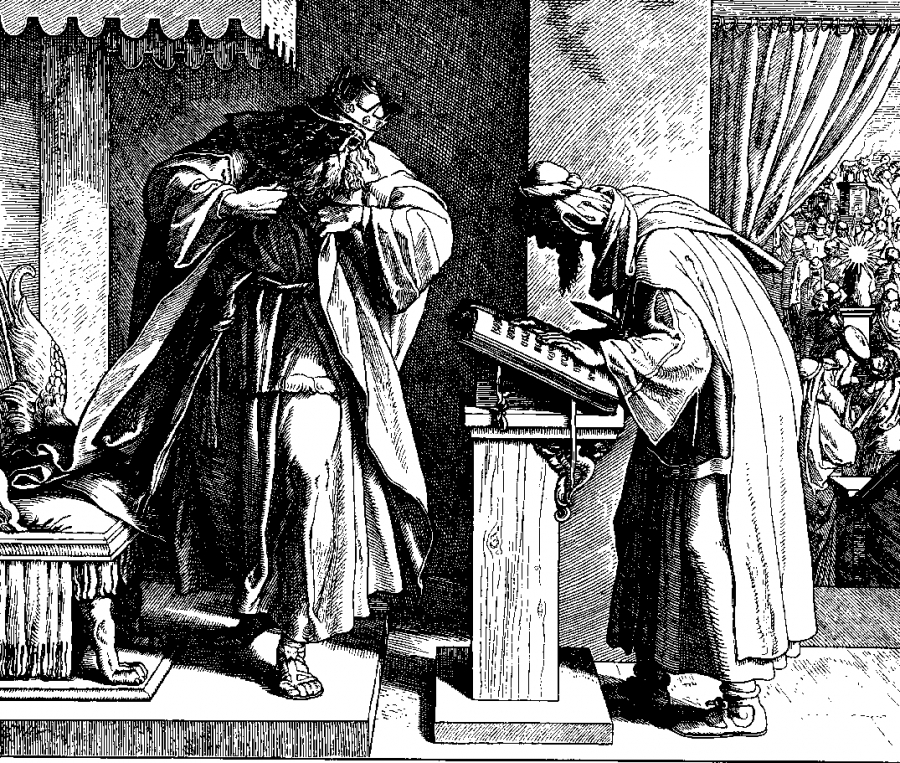
Shaphan read the book and took it to Josiah and read it to the king. Josiah’s reaction to the message of the book was profound. Josiah tore his garments and ordered Shaphan and his son Ahikam, together with Hilkiah and two other officials, to inquire of the Lord and ascertain his will about the book.

The delegation sent by Josiah went to Huldah, the prophetess. The reason the king’s official selected Huldah to provide an evaluation of the book is unknown. However the fact that the High Priest and the Royal Scribe went to a prophet of Yahweh to seek God’s will, reveals the importance of the prophetic word in the religious life of Israel.

Claude Mariottini
Professor of Old Testament
Northern Baptist Seminary

Tags: , , ,

Labels: , , ,