
NOTE:
This post has been withdrawn. The post has been published in my book, Rereading the Biblical Text: Searching for Meaning and Understanding. The approach taken in the book is to compare how different translations have approached difficult texts in the Old Testament. The goal of the book is to invite readers to reread the biblical text in light of the new understanding of the intent of the original writer of the text. You can order the book from Amazon.
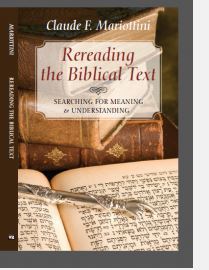
Rereading the Biblical Text
Visit my Amazon author’s page to purchase the book (click here).
Claude Mariottini
Emeritus Professor of Old Testament
Northern Baptist Seminary
A Note About This Post:
Before “Understanding Psalm 17:14” was withdrawn for publication, “Understanding Psalm 17:14” was read by 6765 readers. “Understanding Psalm 17:14” was also shared 8 times by readers who enjoyed reading the post. You can read “Understanding Psalm 17:14” and other articles on problems in Bible translation by reading my book Rereading the Biblical Text: Searching for Meaning and Understanding. Below is the content of the book:
CONTENTS
Acknowledgments – Page xi
Abbreviations – Page xii
Introduction – Page xv
SECTION 1 — THE PENTATEUCH
Chapter 1. The Creation of Animals in Genesis 2:19 – Page 3
Chapter 2. The Serpent Was Right (Genesis 3) – Page 7
Chapter 3. The Seed of the Woman (Genesis 3:15) – Page 11
Chapter 4. Were They Really Giants? (Genesis 6:4) – Page 17
Chapter 5. “As Far as Dan” (Gen 14:14) – Page 20
Chapter 6. Abraham and the Promises of God – Page (Genesis 12:7) – Page 23
Chapter 7. The Sacrifice of Isaac (Genesis 22:8) – Page 26
Chapter 8. The Rape of Bilhah (Genesis 35:22) – Page 29
Chapter 9. Miriam, a Leader in Israel (Exodus 15:20) – Page 32
Chapter 10. Azazel (Leviticus 16:8-10) – Page 35
Chapter 11. Understanding Numbers 24:24 – Page 38
SECTION 2 — THE HISTORICAL BOOKS
Chapter 12. The Levite and His Concubine (Judges 19:1–30) – Page 43
Chapter 13. The Sacrifice of Jephthah’s Daughter (Judges 10:6–12:7) – Page 47
Chapter 14. The Fate of Jephthah’s Daughter (Judges 10:6–12:7) – Page 4750
Chapter 15. The Virginity of Jephthah’s Daughter (Judges 10:6–12:7) – Page 54
Chapter 16. Who Went Back to the City? (Ruth 3:15) – Page 59
Chapter 17. Was Ruth Barren? (Ruth 4:13) – Page 59
Chapter 18. King Saul: Little in His Own Eyes (1 Samuel 15:17) – Page 63
Chapter 19. How Old Was Saul? (1 Samuel 13:1) – Page 64
Chapter 20. David and Melchizedek (Psalm 110:4) – Page 67
Chapter 21. David’s Sons Were Priests ((2 Samuel 8:18) – Page 70
Chapter 22. “Him that Pisseth against the Wall” (1 Samuel 25:22) – Page 72
Chapter 23. Whose Cloak Did Ahijah Tear? (1Kinga 11:4–7) – Page 78
Chapter 24. The Challenges of Parenthood (2 Kinga 21:25–26) – Page 82
SECTION 3 — THE WISDOM AND POETICAL BOOKS
Chapter 25. Psalm 8:5: In Search of a Better Translation – Page 87
Chapter 26. Understanding Psalm 17:14 – Page 90
Chapter 27. Jezebel’s Wedding Song (Psalm 45:1–17) – Page 93
Chapter 28. Psalm 100:3: In Search of a Better Translation – Page 99
Chapter 29. Sons or Children? (Psalm 127:3-5) – Page 103
Chapter 30. Proverbs 29:18 – Page 106
Chapter 31. “Black and Beautiful” or “Black but Beautiful”? (Song of Songs 1:5) – Page 108
SECTION 4 — THE PROPHETICAL BOOKS
Chapter 32. The Use of Gender Inclusive Language (Isaiah 9:1) – Page 115
Chapter 33. “You Have Increased Their Joy” (Isaiah 9:3) – Page 118
Chapter 34. Who Will the Messiah Strike? (Isaiah 11:4) – Page 120
Chapter 35. The Way of the Lord (Isaiah 40:3) – Page 122
Chapter 36. “All Their Goodliness” (Isa 40:6) – Page 126
Chapter 37. The Proclaimer of Good News (Isaiah 40:9) – Page 129
Chapter 38. The Problem of Divorce in the Old Testament (Isaiah 50:1) – Page 132
Chapter 39. Beulah Land (Isaiah 62:4) – Page 135
Chapter 40. The Balm of Gilead (Jeremiah 8:22) – Page 138
Chapter 41. The Mother of Seven (Jeremiah 15:9) – Page 142
Chapter 42. The Coming of the Messiah (Daniel 9:25–27) – Page 144
Chapter 43. The Seventy Weeks of Daniel (Daniel 9:25–27) – Page 148
Chapter 44. The Knowledge of God (Hosea 4:1) – Page 152
Chapter 45. The Word “Hesed” in the Book of Hosea (Hosea 4:1) – Page 154
Chapter 46. The Word “Justice” in Amos (Amos 5:24) – Page 157
Chapter 47. “What the Lord Requires” (Micah 6:8) – Page 160
Bibliography – Page 165
Index of Subjects – Page 169
Index of Authors – Page 171
Index of Scriptures and Other Ancient Documents – Page 173
Claude Mariottini
Emeritus Professor of Old Testament
Northern Baptist Seminary
NOTE: Did you like this post? Do you think other people would like to read this post? Be sure to share this post on Facebook and share a link on Twitter or Tumblr so that others may enjoy reading it too!
I would love to hear from you! Let me know what you thought of this post by leaving a comment below. Be sure to like my page on Facebook, follow me on Twitter, follow me on Tumblr, Facebook, and subscribe to my blog to receive each post by email.
If you are looking for other series of studies on the Old Testament, visit the Archive section and you will find many studies that deal with a variety of topics.











 Dr. Claude Mariottini - Professor of Old Testament
>Hi Dr. Mariottini. You say that the “psalmist asked for protection against wicked people whose reward is in this world.” That sounds like the Psalmist believed in the afterlife: Sure, the wicked prosper in this world, but the righteous will prosper in the next. But a lot of scholars deny that the Psalmist had a rigorous concept of the afterlife. He talks about going to Sheol, which isn’t exactly a place of reward. When he asks God to deliver him from the pit, he means he wants God to save him from his enemies, not resurrect him.Any thoughts on this?
LikeLike
>James,This is a good question. Many scholars take the expression “when I awake” in verse 15 to mean “when I awake in the morning.” This interpretation would understand Psalm 17 to contain a prayer made at night. However, since the people of Israel described death as “sleep,” it is possible to understand the psalm as being post-exilic and thus reflect a belief in the resurrection of the dead. Such interpretation is possible since the psalmist is saying that the wicked’s reward is in this life.There is another possibility. The Hebrew literally says about the wicked: “their portion [is] in life.” This could then be interpreted to mean that the wicked’s reward is what they have in this world but that the righteous’ reward is God.I take the view that the psalmist believed that he would enjoy God’s presence after death. It is quite possible that belief in the afterlife developed in Israel before the exile.Thank you for your comment.Claude Mariottini
LikeLiked by 1 person
>Since I’m the one who asked about it — thanks! I was well over my head when it came to trying to parse out who was making the best sense of the Hebrew.In regards to the afterlife, I also felt that the psalmist (David? It is traditionally ascribed to him and seems to be consistent with other psalms ascribed to him.) was deliberately evoking more than just a literal interpretation of awake. But I thought it was a case of both/and. It seems to me that the psalmist expected the presence of God here and now, and God’s divine presence did much to sustain him even when he was surrounded by his enemies. I think too often we expect God to make things better in Heaven, but we don’t really expect Him to do much on this earth!
LikeLike
>Blake,I do not disagree with your argument. The psalmist believed that God would bless him here and now because he said that the children of the righteous would be blessed in this life. But I believe more is at stake here.If the psalmist expected his reward to be only his fellowship with God during the night or in the morning, then his hope was somewhat limited. As a righteous person, he already enjoyed fellowship with God. Although he was a righteous person, he would wake up in the morning and face the same problems he had faced on the previous day. I believed he wished for fellowship with God in this life and beyond.Claude Mariottini
LikeLike
>Dr. Mariottini,My husband has turned from God, and is going through a bipolar downturn simultaneously. I worry so much about our 2 young boys, that they will experience the bipolar disorder that has plagued 3 generations of my husband’s family..and I intercede for my husband continually. This morning while praying for both situations, this verse address came to me. I immediately looked it up (in NIV, which has the positive translation for the righteous) and felt the peace of God. However, I have made practice of exegeting Scripture that speaks to me and was so disheartened by the conflicting scholarly opinions. Your explanation was extremely helpful to me. I believe that the Holy Spirit is a Spirit of Comfort. God used you to confirm that comfort to me by confirming an appropriate translation of His Word.
LikeLike
>Dear Friend,It is a sad situation when a loved one turns from God. This situation together with the bipolar situation of your husband can cause your life to be very difficult.You are doing the right thing. Keep on praying for your husband because God is still on his throne; he is sovereign and he can perform a miracle in the life of your husband.Your Christian life and your positive influence can affect the life of your children more than the disease of your husband.Make sure that your husband gets professional treatment and that he takes his medicine. God will use the doctors and medicine to accomplish his work.I prayed for you and your family today and asked God to pour his grace on you and your family. God’s love and God’s grace are new every morning (Lamentations 3:22-23).Thank you for visiting my blog.Claude Mariottini
LikeLike
>Thanks for the help on this difficult passage. It can be difficult to argue for the truth of scripture when such contradictory translations are possible.How common is it for such differences to exist?How do you answer skeptics who would use situations like this to discount our current understanding of scripture. I think I know but would be interested to hear your answer. Brian Metzger
LikeLiked by 1 person
>Brian,Thank you for your comment. There are many difficult passages in the Hebrew Bible and scholars try hard to communicate the message of the writers in ways that make sense to readers who do not know Hebrew. This is the reason translations differ. However, this problem does not take way from the message of the Bible.People who do not accept the message of the Bible will use any reason to criticize the Bible. Our faith is not based on how one verse is translated. Our faith is based of the whole work of God and what he has done in Christ.Thank you for visiting my blog.Claude Mariottini
LikeLike
>hi Dr. Mariottini,the earlier version of the NIV followed this positive translation:"You still the hunger of those you cherish;their sons have plenty,and they store up wealth for their children"but the latest version of the NIV, copyrighted 2011, has changed to the negative translation:"May what you have stored up for the wicked fill their bellies; may their children gorge themselves on it, and may there be leftovers for their little ones. "do you have any comments on this change in translation? why do you think they have opted for the negative version? do you have any stronger arguments for the positive version than what you have presented so far?i'm doing a part-time Masters in Christian Studies. i haven't learnt any hebrew yet, but if i understand you correctly, it hinges on the translation of וצפינך. it can either be "God's treasured ones" or "treasure" with which God fills the bellies of the wicked. is there any way we can know with greater certainty which translation is the correct one?God bless,siehjin
LikeLike
Thank you so much for your translation of this scripture. I came across this verse in my reading today and it wasn’t easily understood. I have no difficulty with your interpretation, in terms of God blessing the righteous because it’s scriptural. I don’t agree with another poster, who stated that the righteous are blessed in the next life. That is not entirely true, since God has stated in 3 John 1:2 that He desires above ALL things, that we may prosper and be in health, even as our soul prospers. It’s a righteous thing to increase what we have, as depicted in the parable of the talents. I believe it’s also a righteous thing to bless one’s children and grandchildren financially.
LikeLike
H. Davies,
Thank you for your comment. And thank you for visiting my blog.
Claude Mariottini
LikeLike
Pingback: C. S. Lewis’ Reflections on the Psalms Redux | Veracity
Thank you for this nice, short article on the background of the passage and the Hebrew. Helped clarify this passage without having to read several books or commentaries on it.
LikeLike
Brian,
Thank you for your nice words. The text is difficult, but when properly interpreted, it offers a beautiful message to those who love God.
Claude Mariottini
LikeLike
Thank you for providing this study…as I too was confused by v14. It appeared to say that leaving an inheritance for my children was wrong on His eyes. I am hopeful that your conclusion is correct in that God wishes to bless His treasured ones and their children. Thank you
LikeLike
Debi,
Thank you for your nice words. I have presented the best understanding of a difficult text. God truly wants to bless his people and their children. As Christian parents, our children have an opportunity to come to faith in Jesus Christ through our faith and commitment to Christ. Christian parents can leave a wonderful legacy to their children.
Claude Mariottini
LikeLike
Hello Brother Claude,
I have been singing a psalter from Psalm 17 for years. I don’t remember which translation it originated from, but it goes like this (vs. 1-7a, and then vs. 14 and 15 for the chorus.) I am so thankful I found your post today because I had stopped singing and sharing it with others since the majority of modern translations look at the full-bellied ones as the bad guys (and I had learned just the opposite.) Now I can sing the song joyfully and freely again and bless others with it too. Thanks for showing me it actually can be translated the way I was understanding it. If you want to hear a recording of it, I can send it in an email if you just let me know.
Thanks,
Joy
Hear O Lord, my righteous plea
Listen to my cry
Give ear to my prayer
It does not rise from deceitful lips
May my vindication come from you
May your eyes see what is right
Though you probe my heat, and examine me at night
Though you search me you will find nothing
I have resolved that my mouth will not sin
CHORUS
You still the hunger
Of those you cherish
Their sins have plenty
And you store up wealth for their children
And I, in righteousness
I will see your face
When I awake
I will be satisfied
With seeing your likeness
And I, in righteousness
I will see your face
As for, the deeds of men
By the word of your lips
I have kept myself
From the way of the violent
My steps have held to your paths
My feet have not slipped
I call on you O God
For you will answer me
Give ear to me and hear my prayer
Show the wonder of your great love
LikeLike
Joy,
Thank you for your nice words. I have never heard this song before. I would appreciate you sending me the link so that I can become familiar with this hymn.
Thank you for visiting my blog.
Claude Mariottini
LikeLike