
NOTE:
This post has been withdrawn. The post has been published in my book, Rereading the Biblical Text: Searching for Meaning and Understanding. The approach taken in the book is to compare how different translations have approached difficult texts in the Old Testament. The goal of the book is to invite readers to reread the biblical text in light of the new understanding of the intent of the original writer of the text. You can order the book from Amazon.
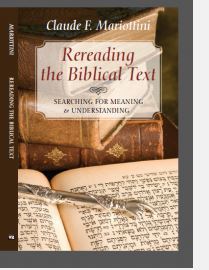
Rereading the Biblical Text
Visit my Amazon author’s page to purchase the book (click here).
Claude Mariottini
Emeritus Professor of Old Testament
Northern Baptist Seminary
A Note About This Post:
Before “Rereading Genesis 6:4: Were They Really Giants?” was withdrawn for publication, “Rereading Genesis 6:4: Were They Really Giants?” was read by 4511 readers. “Rereading Genesis 6:4: Were They Really Giants?” was also shared 299 times by readers who enjoyed reading the post. You can read “Rereading Genesis 6:4: Were They Really Giants?” and other articles on problems in Bible translation by reading my book Rereading the Biblical Text: Searching for Meaning and Understanding. Below is the content of the book:
CONTENTS
Acknowledgments – Page xi
Abbreviations – Page xii
Introduction – Page xv
SECTION 1 — THE PENTATEUCH
Chapter 1. The Creation of Animals in Genesis 2:19 – Page 3
Chapter 2. The Serpent Was Right (Genesis 3) – Page 7
Chapter 3. The Seed of the Woman (Genesis 3:15) – Page 11
Chapter 4. Were They Really Giants? (Genesis 6:4) – Page 17
Chapter 5. “As Far as Dan” (Gen 14:14) – Page 20
Chapter 6. Abraham and the Promises of God – Page (Genesis 12:7) – Page 23
Chapter 7. The Sacrifice of Isaac (Genesis 22:8) – Page 26
Chapter 8. The Rape of Bilhah (Genesis 35:22) – Page 29
Chapter 9. Miriam, a Leader in Israel (Exodus 15:20) – Page 32
Chapter 10. Azazel (Leviticus 16:8-10) – Page 35
Chapter 11. Understanding Numbers 24:24 – Page 38
SECTION 2 — THE HISTORICAL BOOKS
Chapter 12. The Levite and His Concubine (Judges 19:1–30) – Page 43
Chapter 13. The Sacrifice of Jephthah’s Daughter (Judges 10:6–12:7) – Page 47
Chapter 14. The Fate of Jephthah’s Daughter (Judges 10:6–12:7) – Page 4750
Chapter 15. The Virginity of Jephthah’s Daughter (Judges 10:6–12:7) – Page 54
Chapter 16. Who Went Back to the City? (Ruth 3:15) – Page 59
Chapter 17. Was Ruth Barren? (Ruth 4:13) – Page 59
Chapter 18. King Saul: Little in His Own Eyes (1 Samuel 15:17) – Page 63
Chapter 19. How Old Was Saul? (1 Samuel 13:1) – Page 64
Chapter 20. David and Melchizedek (Psalm 110:4) – Page 67
Chapter 21. David’s Sons Were Priests ((2 Samuel 8:18) – Page 70
Chapter 22. “Him that Pisseth against the Wall” (1 Samuel 25:22) – Page 72
Chapter 23. Whose Cloak Did Ahijah Tear? (1Kinga 11:4–7) – Page 78
Chapter 24. The Challenges of Parenthood (2 Kinga 21:25–26) – Page 82
SECTION 3 — THE WISDOM AND POETICAL BOOKS
Chapter 25. Psalm 8:5: In Search of a Better Translation – Page 87
Chapter 26. Understanding Psalm 17:14 – Page 90
Chapter 27. Jezebel’s Wedding Song (Psalm 45:1–17) – Page 93
Chapter 28. Psalm 100:3: In Search of a Better Translation – Page 99
Chapter 29. Sons or Children? (Psalm 127:3-5) – Page 103
Chapter 30. Proverbs 29:18 – Page 106
Chapter 31. “Black and Beautiful” or “Black but Beautiful”? (Song of Songs 1:5) – Page 108
SECTION 4 — THE PROPHETICAL BOOKS
Chapter 32. The Use of Gender Inclusive Language (Isaiah 9:1) – Page 115
Chapter 33. “You Have Increased Their Joy” (Isaiah 9:3) – Page 118
Chapter 34. Who Will the Messiah Strike? (Isaiah 11:4) – Page 120
Chapter 35. The Way of the Lord (Isaiah 40:3) – Page 122
Chapter 36. “All Their Goodliness” (Isa 40:6) – Page 126
Chapter 37. The Proclaimer of Good News (Isaiah 40:9) – Page 129
Chapter 38. The Problem of Divorce in the Old Testament (Isaiah 50:1) – Page 132
Chapter 39. Beulah Land (Isaiah 62:4) – Page 135
Chapter 40. The Balm of Gilead (Jeremiah 8:22) – Page 138
Chapter 41. The Mother of Seven (Jeremiah 15:9) – Page 142
Chapter 42. The Coming of the Messiah (Daniel 9:25–27) – Page 144
Chapter 43. The Seventy Weeks of Daniel (Daniel 9:25–27) – Page 148
Chapter 44. The Knowledge of God (Hosea 4:1) – Page 152
Chapter 45. The Word “Hesed” in the Book of Hosea (Hosea 4:1) – Page 154
Chapter 46. The Word “Justice” in Amos (Amos 5:24) – Page 157
Chapter 47. “What the Lord Requires” (Micah 6:8) – Page 160
Bibliography – Page 165
Index of Subjects – Page 169
Index of Authors – Page 171
Index of Scriptures and Other Ancient Documents – Page 173
Claude Mariottini
Emeritus Professor of Old Testament
Northern Baptist Seminary
VISIT MY AMAZON AUTHOR’S PAGE
BUY MY BOOKS ON AMAZON (Click here).
NOTE: Did you like this post? Do you think other people would like to read this post? Be sure to share this post on Facebook and share a link on Twitter or Tumblr so that others may enjoy reading it too!
I would love to hear from you! Let me know what you thought of this post by leaving a comment below. Be sure to like my page on Facebook, follow me on Twitter, follow me on Tumblr, Facebook, and subscribe to my blog to receive each post by email.
If you are looking for other series of studies on the Old Testament, visit the Archive section and you will find many studies that deal with a variety of topics.











>I’m curious about what if any relationship you see between Gen 6:4 and certain details of Sumerian texts. Thanks 🙂
LikeLike
>Dear Fencekicker,Thank you for visiting my web page. Your question is very interesting. It is possible that the story reflects Canaanite religion rather than Sumerian religion. Most scholars agree that the language of this enigmatic passage has some parallel with the Canaanite religious texts found at Ugarit.Again, thank you for your comment. Claude Mariottini
LikeLike
>Dr. Mariottini,In the past I just glossed over Ge. 6:4. I think one key to unlocking this mystery is that when we don’t know what something means, we must look at what it doesn’t mean. The Nephilim were called giants because the sons of God married the daughters of men. Some have interpreted this as fallen angels marrying human women. However, spiritual beings do not procreate, so this interpretation must be discounted. The term sons of God is more apt to denote individuals that had some covenant relationship with God through the line of Adam to Seth and the daughters of Cain. Why this would create “giants” or “Nephilim” is not completely clear, but I suspect it had to do with earlier genetics, because during this time people lived longer also. Also customs of people during the pre-flood era is not very clear.
LikeLike
>The NIV is a most unreliable version of interpretations regards the Holy Bible and not to be relied upon. There are many web sites on the internet that will explain the NIV and how it is far from constructive.Key in NIV reliable or not and see for yourselves.
LikeLike
>Dear Cob,The NIV has its problems but some of the articles you have read about the NIV are wrong in saying why the NIV is unreliable.If you do a Google search of my blog (there is a search engine in my blog that searches only my blog), you will discover that I have written several articles dealing with the NIV.Thank you for visiting my blog.Claude Mariottini
LikeLike
>recently heard an interesting spin on the translation of nephilim from hebrew as “those who came down” which is very similar to “the fallen ones” but could drastically alter the story.could “those who came down” refer to extra-terrestrials who could have superhuman qualities described in the Bible.this also may explain how they were still around postflood.they may have “come back down” when the coast was clear.what do you think? i’m not crazy- i just have a very open mind.
LikeLike
>Dear Friend,Thank you for visiting my blog and for your question. The suggestion you propose is not good for two reasons. First, in Hebrew, “to come down” is a word different from the word “naphal” (to fall).The idea that the Nephilim were ET is just not acceptable. I still believe that the suggestion I have proposed better explain the text.Claude Mariottini
LikeLike
>Hi. I recently became interested in this subject when I was trying to decipher which Indo-Europeans inhabited a hittite protectorate during the years of homers “Troy” being Wilusa or Troy. I became interested in who were the invaders of the north causing the Greek dark ages shortly after the sack of troy. I had hoped for script writing purposes it was The Trojans who had returned. But stumbled upon some things you may be interested in. The ancient Greek legend refers to the period WE call the Dorian invasion, as the “Return of the Heracleidae” being the decendants of several generations past of Heracles or ( Hercules ) The son of Zeus— Sons of God men?The Greek word used for return this author says actualy was translated from: “katienai” and “katerchesthai meaning:, literally those who “come down” or “go down”Now I, having different sources claiming to know the timeline of the writing of Genesis have turned to you. The so Called Dorian invasions began sometime within 1250-1150. If as legend said that they were only several generations removed from the exiled and deceased Heracles. then that may put us as far back as somewhere near 1350BC. 2 questions, Was the book of genesis written after 1350 BC?Could this note be referring to the people of heracles of the Greeks? Or maybe is the story of Heracles a reflection of the Hebrew texts in an attempt to earmark these Great Warrior people of magnificent feat? Is there any link here?I will check back and hope this has not been to indepth or lack clarity.Kelly
LikeLike
>excuse me- “This note” being the genesis refference of Nephilim.
LikeLike
>Why is it not acceptable for the Nephilim to be ET? I have read a lot of Sumerian texts and that is where this came from. The Sumerians were the earliest known people on earth. What they have to say is more reliable than any other book written after where their texts were twisted (the bible). I know when the truth is said people get scared because what they were taught all their life might not be true and so they say it is unaceptable.
LikeLike
>Dear Friends,The probability that the Nephilim were ET is small, to say the least. Many people have tried to find extra-terrestrials in the Bible, but this is a case of a fertile imagination. Just because the Sumerians lived many years ago do not prove that they were more advanced than people who lived centuries after them.Claude Mariottini
LikeLike
>I BELIEVE ANGELS DID FALL, THE ONES THAT FALL AWAY FROM GOD. ANGELS WHERE KNOWN BEFORE THE FLOOD TO COMMUNICATE WITH US HUMANS. THEY EVEN TALK AND EAT WITH US. SO WHY COULDN'T THEY LIVE OR MARRY MEN'S DAUGHTERS. ANGELS HAVE KNOWN TO TAKE HUMAN FORM. GOD GAVE THEM A WILL OF THERE OWN, SO WHY CAN'T THEY SIN LIKE US. JESUS DID SAY ANGELS CANNOT MARRY, BUT THAT IS ONLY IN HEAVEN. I LISTEN TO CHUCK MISSLER ALL THE TIME AND HE TALKS ABOUT THIS AND I BELIEVE WHAT HE SAIDS. HE HAS ALMOST 40 YEARS AS A SCHOLER AND HE HAS STUDIED HEBREW SO HE WOULD KNOW.
LikeLike
>Dear Friend,Thank you for visiting my blog and for your comment.I hope you will find other posts of interest to you.Claude Mariottini
LikeLike
>I am under the impression that the SONS OF GOD were men in the Godly line of Seth, and the Daughters of man were women from the un-Godly line of Cain. This unacceptable union produced Nephilim (Men of Renoun), these were regular humans who became terrible if not evil men even kings or rulers. The corupt nature of these and all men was the reason for God sending the great flood. I do accept that there were Giants in the bible, however I don't believe that Gen 6 is refering to them.
LikeLike
>Dear Anonymous,The interpretation that the sons of God were the godly people and the daughters of men were the daughters of Cain has been proposed by many people, but I do not believe it is a good interpretation.Mixed marriage is not a good reason for a flood that destroyed the whole world.The translation of "giants" for the Nephilim is based on the Septuagint, the Greek Translation. The word "nephilim" means "the fallen ones."Thank you for visiting my blog.Claude Mariottini
LikeLike
>Mixed marriages were absolutely a perfect reason for the destruction of the world. The intermingled union of Sethites and Cainanites were in direct rebellion to God, that is sin and all sin is worthy of death. After further study another point became clear, there is no direct reference that says that the Nephilim were even a result of any such union be it angelic/human or strictly human. The bible only says that they were on the earth at the same time and after. My point is that God intended for the two lines to remain distinct. We still to this day are discouraged to become unequaly yolked, however now we have the blood of Christ so we do not have to suffer God's wrath.
LikeLike
>Dear Friend,Read Genesis 6:11. This is the real reason for the flood.Claude Mariottini
LikeLike
>I never said that mixed marriages were the only reason for the flood. God destroyed his creation because every thought and intention of man was evil. This I know but it doesn't mean that the nephilim were a race of giants either. Mixed marriages were a result of man's evil intentions not the cause, this bows not negate the fact that ALL sin is worthy of wrath and destruction. Another point is that angels had not been mentioned yet in scripture, however Moses did speak openly against mixed marriages between Cainenites and Sethites. Moses also called Israel "sons of God" when he went before Pharoh in Egypt.
LikeLike
>Dr. Mariottini, I want to apologies if in my previous posts I sound like I'm trying to draw you into a heated discussion. That is not my intent. I do respect your views on this topic, I do however believe that there is more to this text contextualy. Am I wrong in my quest for clarity? Sometimes I can go a little overboard when I try to defend my position. I am very sorry if I offended you. We are after all brothers under the same blood of Christ.
LikeLike
Yes, this is a fascinating topic. First timer to this site. I’d be interested in Dr. Mariottini’s thoughts about the following theory of mine:
One of the great over-arching themes in the Bible is that it documents in painful detail our hopeless attempts at human self-government, starting at the smallest level possible with just two people in a husband and wife relationship and ending up at the largest level possible with an attempt at world-wide dominion by an unholy anti-christ and false prophet. Every imaginable form of human government must be tried and shown to be a failure before King Jesus comes back and sets up his rule and reign.
After the Fall, the next “advancement” in the form of human government would have been the “clan” system, the earliest form of a tribal system. The rules of society would be set and enforced by the most powerful family around.
Now we know that God put a “mark” on Cain, but nobody knows what that was exactly, except that somehow it was a deterrant to anyone who may have wanted to do violence to Cain.
This is pure speculation on my part, but what if, when God marked Cain, the “mark” was actually a change to his DNA? A marker in his gene pool, if you will. Cain’s offspring (both sexes) could have been of an extraordinary stature and of an exponentially violent disposition. “If anyone kills Cain, he will suffer vengeance seven times over.” (Gen. 4:15). In other words, his giant sons would be a formidable form of deterrance in any confrontation between Cain and his family and others. Lamech strategically increased the odds in his favor by marrying two wives, thus multiplying his “quiver” and potential for vengeance even further (Gen 4:23-24)
If the children of Cain intermarried with the children of Seth, Cain’s DNA mutation could have been passed down into both lines. The violence would have quickly become widespread, rising to a level that ultimately moves the hand of God in judgment (Gen. 6:5). Since we don’t know anything about the wives on Noah’s ark, it seems possible that at least one of the wives (perhaps of Ham) could have carried the mutation. So that’s my theory about how the Nephilim could have been on the earth both before and after the flood. Seems logical and consistent with the text, what do you think?
LikeLike
Dear Beancounter,
Thank you for visiting my blog. I am glad that you enjoy my post. If you visit the Archive page of my blog, you will find several other posts you will enjoy reading.
As for your theory, I am sorry to say, it is not a very good way of understanding the problem of the Nephilim. The mark on Cain was a visible mark that was designed to protect him, not his descendants, from being killed. A DNA change would take several generations to take effect and would have no relevance to Cain’s situation. The identity of the Nephilim is a difficult problem that finds no easy solution.
Thank you for your comment.
Claude Mariottini
LikeLike